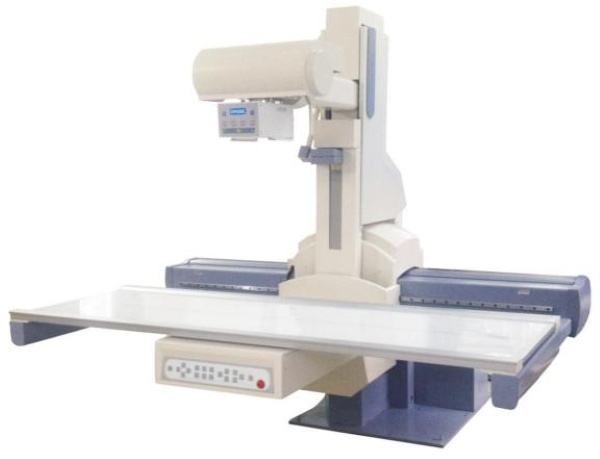
Future Trends in Digital Radiography
Digital Radiography has transformed medical imaging. It delivers faster image acquisition, improved diagnostic accuracy, and more efficient clinical workflows. As healthcare continues to embrace digital technologies, Digital Radiography is evolving beyond image capture to become a more intelligent, connected, and patient-centered imaging solution.
Recent advances in artificial intelligence, Flat Panel Detector technology, radiation dose optimization, and system integration are reshaping the future of medical imaging. These innovations improve image quality and workflow efficiency. They also help healthcare providers deliver safer and more accurate patient care. Understanding these emerging trends can help hospitals, imaging centers, and healthcare providers make informed decisions when planning future equipment investments.
Artificial Intelligence Is Transforming Digital Radiography
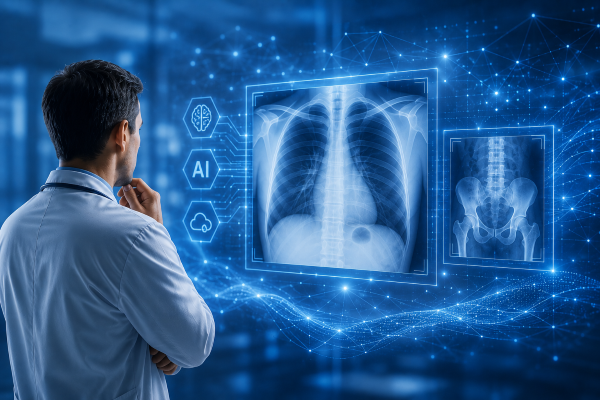
Artificial Intelligence (AI) is becoming one of the most significant developments in Digital Radiography. AI does not replace radiologists. Instead, it improves imaging workflows by assisting with image acquisition, quality control, and clinical decision-making.
Modern AI algorithms can identify anatomical regions automatically. They also optimize exposure parameters and detect positioning errors before an examination is completed. This reduces the need for repeat examinations, improves workflow efficiency, and helps maintain consistent image quality.
AI also improves image quality by reducing noise, enhancing contrast, and increasing image clarity. It does this without increasing radiation exposure.n some healthcare facilities, AI-powered software highlights suspicious findings for further review. This helps clinicians prioritize urgent cases more effectively.
As AI technology continues to mature, it is expected to become an increasingly important component of future Digital Radiography Systems.
Flat Panel Detector Technology Continues to Advance
The Flat Panel Detector (FPD) remains the core imaging component of every Digital Radiography System. Continuous innovation in detector technology continues to improve image quality and system performance.
Modern Flat Panel Detectors offer higher Detective Quantum Efficiency (DQE). This allows them to capture more imaging information while using lower radiation doses.Improvements in pixel design and detector materials also improve spatial resolution. This allows clinicians to visualize anatomical structures more clearly.
Wireless Flat Panel Detectors are becoming increasingly popular because they provide greater flexibility during examinations and simplify system installation. Manufacturers also continue to develop lighter and more durable detector designs. These improvements enhance portability and withstand daily clinical use.
Future Flat Panel Detector technology is expected to deliver even faster image acquisition, enhanced durability, and improved energy efficiency, further supporting the evolution of Digital Radiography.
Lower Radiation Dose Without Compromising Image Quality
Reducing patient radiation exposure remains a major priority in modern medical imaging. One of the most important trends in Digital Radiography is achieving lower radiation doses while maintaining excellent diagnostic image quality.
Advances in detector sensitivity, image processing algorithms, and AI-assisted image reconstruction improve imaging efficiency. They allow healthcare providers to obtain high-quality images with less radiation. This supports the ALARA (As Low As Reasonably Achievable) principle. It encourages minimizing radiation exposure whenever clinically appropriate.
Dose optimization benefits not only patients but also healthcare professionals who perform imaging examinations throughout the day. Lower radiation exposure contributes to safer clinical environments while maintaining the diagnostic confidence required for accurate medical decision-making.
As Digital Radiography technology continues to advance, future systems are expected to achieve even greater improvements in dose efficiency without compromising image quality or workflow performance.
Mobile Digital Radiography Expands Point-of-Care Imaging
Mobile Digital Radiography is becoming increasingly important as healthcare providers seek faster and more flexible imaging solutions. Instead of transporting patients to the radiology department, mobile DR systems allow examinations to be performed directly at the point of care.
These systems are widely used in intensive care units (ICUs), emergency departments, operating rooms, isolation wards, and long-term care facilities, where patient movement may be difficult or time-sensitive.
Advances in battery technology, wireless Flat Panel Detectors, and lightweight system design have significantly improved the mobility and efficiency of modern mobile DR systems. Future developments are expected to further enhance portability, extend operating time, and support a wider range of clinical applications, making mobile imaging an essential part of modern healthcare.
Cloud Connectivity and System Integration Improve Workflow
As healthcare becomes increasingly digital, seamless connectivity has become a key trend in Digital Radiography. Modern imaging systems are no longer standalone devices but integrated components of hospital information networks.
Today’s Digital Radiography Systems can connect with PACS, RIS, HIS, and cloud-based platforms. This allows medical images and patient information to be stored, shared, and accessed securely across different departments and healthcare facilities.
Cloud connectivity supports remote image review, telemedicine, and multi-site collaboration. Specialists can access diagnostic images regardless of location. At the same time, improved system integration reduces manual data entry, minimizes workflow interruptions, and increases overall operational efficiency.
As digital healthcare continues to evolve, interoperability and secure data exchange will play an increasingly important role in future Digital Radiography workflows.
Specialized Digital Radiography Systems Continue to Grow
Healthcare providers are increasingly seeking Digital Radiography solutions designed for specific clinical applications rather than relying on a single general-purpose imaging system.
Specialized Digital Radiography Systems are now available for many healthcare environments. These include mammography, veterinary imaging, mobile radiography, dynamic imaging, and emergency medicine. These systems are designed to meet the unique imaging requirements of different patient groups and clinical workflows.
At the same time, modular system designs provide greater flexibility, allowing healthcare facilities to select configurations that match their clinical needs, available space, and future expansion plans. This trend enables hospitals and imaging centers to improve operational efficiency while delivering more specialized patient care.
As medical imaging technology continues to evolve, specialized Digital Radiography Systems are expected to become even more diverse, supporting broader clinical applications across healthcare.
Conclusion
The future of Digital Radiography is being shaped by continuous advances in artificial intelligence, Flat Panel Detector technology, low-dose imaging, mobile solutions, cloud connectivity, and specialized system design. Together, these innovations are improving image quality, workflow efficiency, diagnostic confidence, and patient care.
As new technologies continue to shape the future of Digital Radiography, healthcare providers need imaging solutions that are both reliable today and ready for tomorrow. SEEHO Medical Equipment offers a comprehensive portfolio of Digital Radiography Systems designed to support a wide range of clinical applications while adapting to evolving healthcare needs. Explore our Digital Radiography solutions or contact our team to learn how we can support your next imaging project with professional expertise and dependable technology.