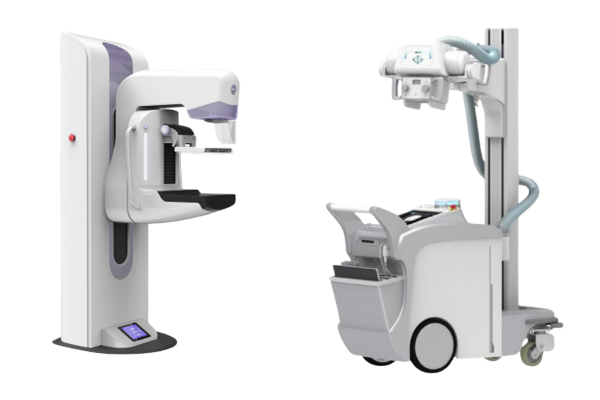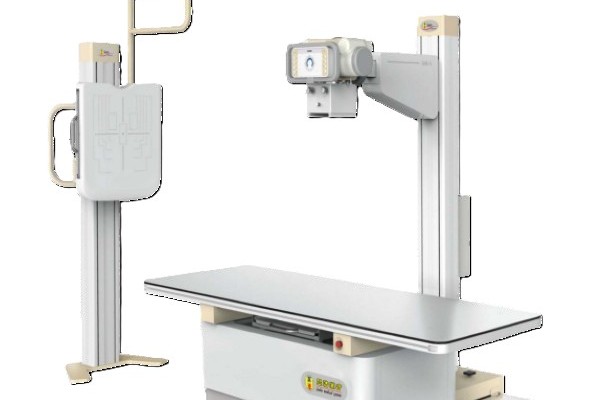
What Is Dynamic Digital Radiography?
Dynamic Digital Radiography is an advanced X-ray imaging technology that does not capture a single static image. Instead, it acquires a series of digital X-ray images over time. By continuously collecting images within a short period, DDR enables healthcare professionals to observe anatomical structures and physiological movements in real time. This capability provides valuable functional information that cannot be obtained through conventional Digital Radiography alone.
Unlike traditional Digital Radiography, which produces one still image for each examination, DDR generates a series of low-dose images that can be displayed as a continuous motion sequence. This enables clinicians to evaluate movement, organ function, and joint mechanics while maintaining the advantages of digital imaging. As medical imaging technology continues to evolve, Dynamic Digital Radiography is becoming an increasingly important tool for improving diagnostic confidence and clinical decision-making.
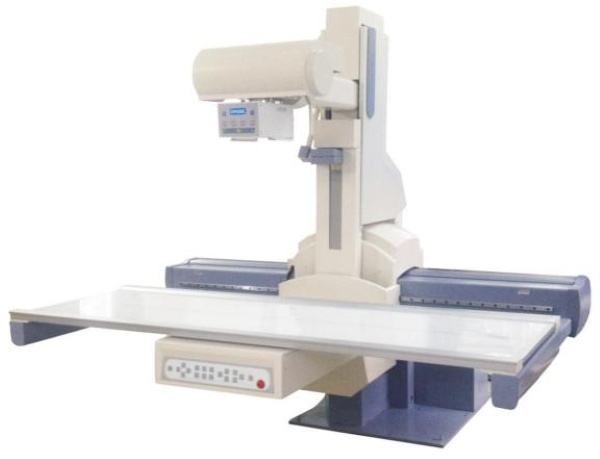
Dynamic Digital Radiography Captures Motion in Real Time
The primary difference between Dynamic Digital Radiography and conventional Digital Radiography is the ability to visualize movement. Instead of capturing a single image, the system acquires multiple images during one examination and combines them into a dynamic sequence.
During image acquisition, the patient performs a specific movement, such as breathing, raising an arm, or bending a joint, while the system continuously records a series of digital images. The resulting sequence allows clinicians to observe changes that occur during motion rather than relying on a single static view.
This real-time imaging capability is particularly valuable when evaluating structures whose function depends on movement. It can reveal abnormalities that may not be visible on conventional radiographs and provides additional information for clinical assessment without requiring more complex imaging procedures.
Key Components Support Dynamic Imaging Performance
Dynamic Digital Radiography combines several advanced technologies to capture and process continuous image sequences efficiently. Each component plays an important role in delivering stable performance and high-quality dynamic images.
The main components include:
- X-ray generator that produces controlled low-dose X-ray exposures throughout the imaging sequence.
- Flat Panel Detector (FPD) that rapidly captures consecutive digital images with high sensitivity and image consistency.
- Image acquisition system that synchronizes X-ray exposure with detector performance to ensure accurate image collection.
- Image processing software that reconstructs, enhances, and displays the captured images as a smooth dynamic sequence.
- Diagnostic workstation that enables clinicians to review, analyze, and manage dynamic imaging studies.
The integration of these technologies allows Dynamic Digital Radiography to provide both excellent image quality and efficient clinical workflow while maintaining relatively low radiation exposure.
Dynamic Digital Radiography in Clinical Practice
Dynamic Digital Radiography offers significant advantages over conventional Digital Radiography by combining high-quality anatomical imaging with real-time functional assessment. By capturing a continuous sequence of low-dose X-ray images, it enables clinicians to observe physiological motion that cannot be evaluated using a single static image.
This dynamic imaging capability improves diagnostic confidence while supporting faster
Because of these benefits, DDR has become increasingly valuable across a wide range of clinical specialties where functional assessment is important.
Common clinical applications include:
- Chest imaging and respiratory function assessment
- Orthopedic examinations and joint motion evaluation
- Musculoskeletal injury assessment
- Rehabilitat
- Emergency and trauma imaging
- Functional evaluation before and after treatment
By combining structural imaging with functional analysis in a single examination, Dynamic Digital Radiography provides clinicians with more comprehensive diagnostic information. This broader clinical perspective supports earlier diagnosis, more accurate treatment planning, and improved patient care across a variety of healthcare settings.DDR helps clinicians better understand how organs, joints, and skeletal structures function during movement.
Dynamic Digital Radiography Differs from Conventional Digital Radiography
Although both technologies use digital detectors and produce high-quality X-ray images, Dynamic Digital Radiography offers capabilities beyond conventional Digital Radiography.
| Conventional Digital Radiography | Dynamic Digital Radiography |
|---|---|
| Captures a single static image | Captures a continuous image sequence |
| Primarily evaluates anatomy | Evaluates both anatomy and physiological motion |
| Limited motion assessment | Real-time functional imaging |
| Standard diagnostic workflow | Additional functional information for diagnosis |
| Suitable for routine examinations | Suitable for both routine and functional imaging applications |
Rather than replacing conventional Digital Radiography, DDR complements existing imaging techniques by providing additional functional information when motion assessment is clinically important.
Future Trends in Dynamic Digital Radiography
As Digital Radiography technology continues to advance, Dynamic Digital Radiography is expected to play a greater role in functional medical imaging. Improvements in detector performance, image processing, and artificial intelligence are making dynamic imaging more efficient, accurate, and accessible.
Future developments are expected to include:
- AI-assisted motion analysis
- Lower radiation dose through advanced image processing
- Higher image acquisition speed
- Improved image quality with next-generation Flat Panel Detectors
- Greater integration with PACS and hospital information systems
These innovations will further enhance diagnostic efficiency while expanding the clinical applications of DDR across different healthcare specialties.
Conclusion
Dynamic Digital Radiography represents an important advancement in modern medical imaging by combining high-quality digital X-ray imaging with real-time functional assessment. Unlike conventional Digital Radiography, it enables clinicians to visualize physiological motion while maintaining efficient workflow and relatively low radiation exposure. This combination provides valuable diagnostic information for a wide range of clinical applications.
At SEEHO Medical Equipment, we understand that every healthcare facility has unique imaging requirements. Our Dynamic Digital Radiography solutions are designed to provide reliable performance, excellent image quality, and advanced dynamic imaging capabilities to support a wide range of clinical applications. Contact our team today to discuss your imaging requirements and discover how our expertise and trusted technology can help optimize your clinical workflow.