How Do DR Systems Integrate with PACS and RIS?
Modern healthcare imaging relies heavily on digital workflow systems that connect imaging devices with hospital information platforms. Among these systems, Digital Radiography (DR) systems, Picture Archiving and Communication Systems (PACS), and Radiology Information Systems (RIS) work together to create a seamless diagnostic workflow.
Understanding how DR systems integrate with PACS and RIS helps hospitals, clinics, and diagnostic centers improve efficiency, reduce manual tasks, and enhance patient care.

DR Systems Generate Digital Images at the Source
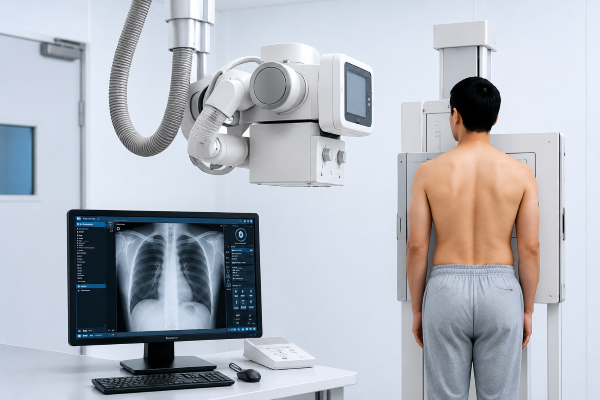
DR systems use flat panel detectors to capture X-ray images instantly after exposure. Unlike older imaging methods, DR produces fully digital images without the need for film or scanning processes.
Once an exposure is completed, the image is immediately available for review on the workstation. This instant digital output is the foundation for integration with hospital systems such as PACS and RIS.
RIS Manages Patient Workflow and Examination Data
The Radiology Information System (RIS) is responsible for managing administrative and clinical workflow in radiology departments.
RIS typically handles:
- Patient registration
- Appointment scheduling
- Examination ordering
- Reporting and documentation
- Workflow tracking
Before a DR examination begins, patient and order information is sent from RIS to the DR workstation. This ensures the correct patient data is matched with the correct imaging procedure.
PACS Stores and Distributes Medical Images
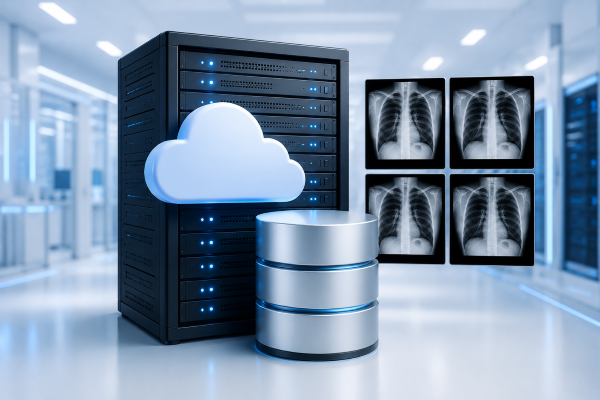
The Picture Archiving and Communication System (PACS) is designed to store, retrieve, and distribute medical images.
Once a DR system acquires an image, it is automatically transferred to PACS, where it can be:
- Stored securely
- Viewed by radiologists
- Shared across departments
- Compared with previous studies
PACS eliminates the need for physical film storage and enables fast access to imaging data across the hospital network.
How DR Systems Connect with RIS and PACS
The integration process typically follows a structured digital workflow:
- Patient information is created in RIS
- Order details are sent to the DR system
- DR system performs imaging and captures X-ray images
- Images are sent automatically to PACS
- Radiologists access images from PACS for diagnosis
This seamless communication is enabled through standardized protocols such as DICOM (Digital Imaging and Communications in Medicine) and HL7 (Health Level Seven).
DICOM Enables Image Communication Between Systems
DICOM is the global standard for medical image communication. It ensures that DR systems, PACS, and other imaging devices can exchange images and metadata consistently.
Through DICOM, DR systems can:
- Send images to PACS
- Attach patient information to images
- Maintain image quality during transfer
- Ensure compatibility across vendors
Without DICOM, integration between imaging devices and hospital systems would not be possible.
HL7 Supports Clinical Data Exchange
While DICOM handles images, HL7 is responsible for clinical data exchange between RIS, PACS, and hospital information systems.
HL7 allows systems to share:
- Patient demographics
- Orders and scheduling information
- Reports and clinical data
Together, DICOM and HL7 create a complete digital communication environment for medical imaging workflows.
Benefits of DR, PACS, and RIS Integration
The integration of these systems provides significant advantages for healthcare facilities:
- Faster imaging workflow
- Reduced manual data entry
- Improved diagnostic efficiency
- Lower risk of human error
- Centralized image storage
- Easier access to patient history
- Enhanced collaboration between departments
This integrated workflow is now considered the standard in modern radiology departments.
DR systems integrate with PACS and RIS through a standardized digital workflow
DR systems play a key role because they are the source of real-time digital images. Without DR, PACS and RIS would still rely on slower imaging methods such as CR or film-based radiography.
By providing instant image acquisition, DR systems enable:
- Real-time diagnosis
- Immediate image review
- Faster patient throughput
- More efficient hospital operations
This makes DR systems the foundation of modern digital radiology infrastructure.
Challenges in Integration
Although integration is highly beneficial, healthcare facilities may face some challenges:
- Compatibility between different vendors
- Network configuration requirements
- Data standardization issues
- Initial system setup complexity
- Staff training requirements
However, these challenges are usually resolved through proper system planning and the use of standardized protocols like DICOM and HL7.
Conclusion
DR systems integrate with PACS and RIS through standardized digital communication protocols, creating a seamless workflow from image acquisition to diagnosis and storage. This integration improves efficiency, reduces manual workload, and enhances overall patient care.
As healthcare continues to evolve toward fully digital environments, the combination of DR systems, PACS, and RIS has become essential for modern radiology departments.
For healthcare facilities planning to upgrade their imaging infrastructure, understanding this integration is critical for building an efficient and future-ready diagnostic workflow.SEEHO Medical Equipment provides Digital Radiography solutions designed to support seamless workflow integration, stable image transmission, and compatibility with modern hospital information systems. Our DR systems are developed to help healthcare institutions improve imaging efficiency, reduce workflow complexity, and achieve fully connected digital radiology environments.
If you are planning to upgrade your imaging system or integrate DR systems with PACS and RIS in your facility, contact SEEHO Medical Equipment to discuss your project requirements and explore suitable solutions for your clinical workflow.