What Should You Consider Before Buying a Digital X-ray Machine?
Purchasing a Digital X-ray Machine is a significant long-term investment for hospitals, clinics, imaging centers, and other healthcare facilities. Beyond the initial purchase price, buyers should carefully evaluate clinical requirements, image quality, system performance, installation conditions, compatibility, and long-term operating costs before making a decision.
Taking the time to assess these factors helps healthcare providers select a Digital Radiography System that not only meets current clinical needs but also improves diagnostic efficiency, optimizes workflow, and delivers greater long-term value.
Understanding Clinical Requirements Helps Identify the Right System
The first step in purchasing a DR System is understanding the specific clinical requirements of your healthcare facility.
Different healthcare providers have different imaging needs. Large hospitals often require systems capable of handling high patient volumes, while community hospitals, specialty clinics, and diagnostic imaging centers may place greater emphasis on flexibility, ease of operation, and cost efficiency.
Before making a purchasing decision, consider:
- Average daily patient volume
- Primary examination types
- Future development plans
- Existing imaging workflow
- Available budget
Clearly defining these requirements helps narrow the available options and supports a more informed purchasing decision.
Image Quality Is Essential When Choosing a Digital X-ray Machine
Image quality is one of the most important factors when evaluating a Digital X-ray Machine.
High-quality images enable healthcare professionals to visualize anatomical structures and abnormalities more accurately, improving diagnostic confidence while reducing unnecessary repeat examinations.
Key aspects to evaluate include:
- Image resolution
- Image contrast
- Dynamic range
- Noise reduction performance
- Image processing software
Excellent image quality not only improves diagnostic accuracy but also enhances the overall patient experience.
Flat Panel Detector Performance Determines Core Imaging Capability
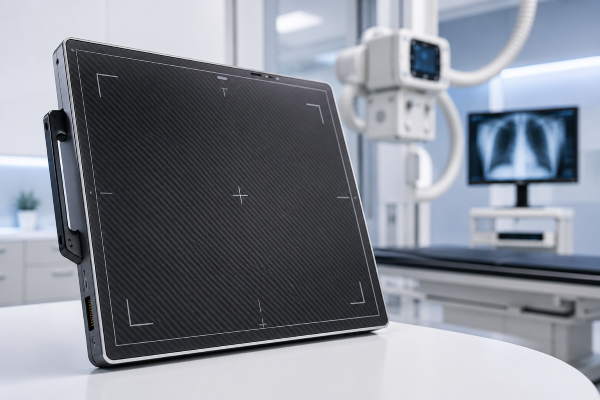
The Flat Panel Detector (FPD) is one of the most critical components of a DR System.
Detector performance directly affects image clarity, acquisition speed, and radiation efficiency.
When comparing different systems, buyers should evaluate:
- Detector size
- Wired or wireless design
- Detective Quantum Efficiency (DQE)
- Pixel size
- Durability and expected service life
A high-performance Flat Panel Detector helps produce clearer medical images while supporting lower radiation doses and greater clinical efficiency.
Workflow Efficiency Improves Digital X-ray Machine Productivity
A Digital Radiography System should not only deliver excellent image quality but also improve the efficiency of daily clinical operations.
An efficient workflow reduces patient waiting time, increases examination capacity, and helps healthcare professionals complete imaging procedures more effectively.
Before purchasing, evaluate whether the system offers:
- Fast image acquisition
- Automatic image processing
- An intuitive user interface
- Workflow automation features
A well-designed workflow helps healthcare facilities improve operational efficiency while providing a smoother experience for both staff and patients.
System Compatibility Supports Digital Healthcare
Digital Radiography (DR) Systems Machines should integrate smoothly with existing healthcare information systems.
Before purchasing, verify that the equipment is compatible with your facility’s digital infrastructure to avoid deployment challenges and support future system upgrades.
Important compatibility features include:
- DICOM communication
- HL7 support (if required)
- PACS compatibility
- RIS compatibility
- Software upgrade capability
Strong system compatibility enables more efficient image management, reduces manual processes, and supports long-term digital transformation.
Installation Requirements Affect Digital X-ray Machine Deployment
Before purchasing a Digital X-ray Machine, healthcare facilities should evaluate whether the installation environment meets the equipment requirements.
Different systems may require specific room dimensions, electrical capacity, network infrastructure, and radiation shielding. Planning these requirements in advance helps avoid unexpected installation costs and project delays.
Before purchasing, confirm:
- Adequate installation space
- Appropriate electrical supply
- Stable network infrastructure
- Compliance with local radiation protection requirements
- Sufficient space for future upgrades
Proper preparation helps ensure smooth installation and reliable long-term operation.
Long-Term Investment Value Goes Beyond the Purchase Price
The purchase price is often one of the first factors considered when buying a Digital X-ray Machine, but it should not be the only one.
Since a Digital Radiography System is typically a long-term investment, healthcare providers should evaluate not only the initial cost but also the overall operating expenses and the system’s ability to support future clinical needs. Equipment with good scalability can reduce future replacement costs, adapt to evolving healthcare environments, and deliver greater long-term value.
Before making a purchasing decision, consider:
- Routine maintenance costs
- Software upgrade expenses
- Replacement costs for consumable or wearable components
- Warranty coverage
- Expected equipment lifespan
- Ongoing software upgrade capability
- Support for additional features or application modules
- Compatibility with future-generation Flat Panel Detectors
- Ability to meet changing clinical requirements
Evaluating these factors provides a more complete understanding of the system’s long-term value and helps healthcare facilities choose a DR System based on overall investment benefits rather than purchase price alone.
Conclusion
Choosing a Digital X-ray Machine involves much more than comparing prices. Healthcare providers should carefully evaluate clinical requirements, image quality, Flat Panel Detector performance, workflow efficiency, system compatibility, installation requirements, and long-term investment value before making a purchasing decision. Considering these factors together helps ensure that the selected system supports both current clinical needs and future development while maximizing operational efficiency and return on investment.
If you are planning to purchase a new Digital X-ray Machine or upgrade your existing imaging equipment, feel free to contact us. Our professional team will recommend the most suitable solution based on your clinical requirements and project plans, while providing comprehensive technical support throughout your decision-making process.