How to Choose the Right Flat Panel Detector?
A Flat Panel Detector (FPD) is the core imaging component of a Digital Radiography (DR) system. It captures X-ray signals and converts them into high-quality digital images, making it one of the most important factors affecting image quality, workflow efficiency, and long-term operating costs.
However, choosing the right Flat Panel Detector involves more than simply comparing technical specifications. Different healthcare facilities have unique imaging requirements, budgets, and clinical workflows. Selecting the right detector means balancing performance, durability, compatibility, and long-term value to support both current and future imaging needs.
Before making a purchasing decision, consider these eight key factors:
- Clinical applications
- Detector size
- Detector technology (CsI vs. GOS)
- Image quality specifications
- Wired or wireless design
- Durability and environmental protection
- System compatibility
- Total cost of ownership
The following sections explain each factor in detail to help healthcare providers choose the most suitable Flat Panel Detector for their imaging requirements.
1. Identify Your Clinical Applications
The first step in choosing a Flat Panel Detector is understanding how it will be used. Different healthcare environments have different imaging priorities, and selecting a detector that matches your clinical workflow can improve efficiency while avoiding unnecessary costs.
| Clinical Application | Recommended Detector Features |
|---|---|
| General radiography | Standard 17×17-inch detector |
| Emergency department | Fast image acquisition and wireless mobility |
| Orthopedic imaging | High spatial resolution |
| Pediatric imaging | Excellent low-dose performance |
| Intensive care (ICU) | Lightweight portable detector |
| Veterinary imaging | Compact and durable detector |
Choosing a detector based on your daily imaging requirements helps maximize both clinical performance and return on investment.
2. Choose the Appropriate Detector Size
Detector size directly affects positioning flexibility, patient comfort, and examination coverage. The appropriate size depends on the types of examinations performed most frequently.
| Detector Size | Typical Applications |
|---|---|
| 17 × 17 inch | General radiography |
| 14 × 17 inch | Chest imaging and mobile DR |
| 14 × 14 inch | Emergency and trauma imaging |
| 10 × 12 inch | Pediatric and extremity imaging |
| 9 × 10 inch | Veterinary and dental imaging |
Larger detectors provide greater anatomical coverage, while smaller detectors are easier to position for specialized examinations.
3. Compare Detector Technology (CsI vs. GOS)
Modern Flat Panel Detectors typically use one of two scintillator materials: Cesium Iodide (CsI) or Gadolinium Oxysulfide (GOS).
Cesium Iodide (CsI)
CsI detectors are known for their excellent imaging performance and dose efficiency.
Advantages include:
- Higher X-ray absorption efficiency
- Better low-dose imaging performance
- Improved image sharpness
- Reduced radiation exposure
- Ideal for high-volume clinical environments
Gadolinium Oxysulfide (GOS)
GOS detectors provide reliable imaging performance at a lower purchase cost.
Advantages include:
- Lower initial investment
- Excellent mechanical durability
- Stable performance for routine imaging
- Cost-effective for many healthcare facilities
The choice between CsI and GOS should be based on clinical requirements, imaging volume, and available budget.
4. Evaluate Image Quality Specifications
Image quality depends on several technical characteristics rather than a single specification.
Important performance indicators include:
- Pixel pitch
- Spatial resolution
- Detective Quantum Efficiency (DQE)
- Modulation Transfer Function (MTF)
- Dynamic range
- Signal-to-noise ratio (SNR)
When comparing detectors, consider how these specifications work together to produce clear, consistent diagnostic images under everyday clinical conditions.
5. Choose Between Wired and Wireless Detectors
Both wired and wireless Flat Panel Detectors offer unique advantages depending on the imaging environment.
Wireless Detectors
Wireless detectors provide greater flexibility for mobile and bedside imaging.
Benefits include:
- Easier patient positioning
- Improved workflow efficiency
- Greater portability
- Reduced cable wear and damage
- Faster examinations
Wired Detectors
Wired detectors remain a practical solution for fixed radiography rooms.
Advantages include:
- Continuous power supply
- Lower purchase cost
- No battery management
- Reliable performance for stationary installations
Facilities performing frequent bedside or emergency imaging often benefit from wireless detectors, while fixed imaging rooms may achieve better value with wired models.
6. Consider Durability and Environmental Protection
Flat Panel Detectors are handled repeatedly throughout the day, making durability an important consideration.
Look for features such as:
- High load-bearing capacity
- Drop resistance
- Waterproof protection
- Dust resistance
- Scratch-resistant housing
A rugged detector helps reduce maintenance costs, minimize downtime, and extend the overall service life of the imaging system.
7. Ensure Compatibility with Your DR System
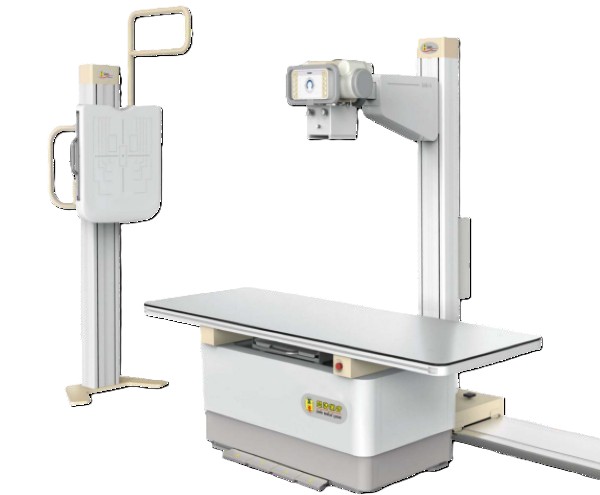
Before purchasing a Flat Panel Detector, verify that it is fully compatible with your existing DR System. A compatible detector helps ensure stable performance, seamless integration, and efficient clinical workflows.
Key areas to evaluate include:
- X-ray generator
- DR acquisition software
- PACS integration
- HIS/RIS connectivity
- Diagnostic workstations
- Network infrastructure
Selecting a Flat Panel Detector that integrates smoothly with your DR System can simplify installation, minimize compatibility issues, and improve the overall efficiency of digital imaging workflows.le detector simplifies installation, improves workflow integration, and helps avoid unexpected system issues.
8. Evaluate the Total Cost of Ownership
The purchase price is only one part of the overall investment. A Flat Panel Detector with a slightly higher initial cost may offer better long-term value through improved reliability and lower maintenance expenses.
When evaluating the total cost of ownership, consider:
- Warranty period
- Software updates
- Battery replacement costs
- Maintenance expenses
- Expected service life
- Technical support
- Spare parts availability
- Service response time
Working with an experienced manufacturer that provides reliable after-sales service and global technical support can help reduce equipment downtime and maximize the lifespan of your imaging system.
Conclusion
Choosing the right Flat Panel Detector involves much more than comparing technical specifications. Healthcare providers should evaluate clinical applications, detector size, imaging technology, image quality, workflow requirements, durability, compatibility, and long-term operating costs before making a purchasing decision.
A carefully selected Flat Panel Detector can improve diagnostic confidence, enhance workflow efficiency, and deliver greater value throughout the life of a Digital Radiography system.
If you’re evaluating Flat Panel Detector options for a hospital, imaging center, or specialty clinic, selecting the right detector can have a significant impact on image quality, workflow efficiency, and long-term operating costs. SEEHO Medical Equipment provides a variety of DR solutions and detector configurations to support different clinical applications and imaging environments.