What Are the Limitations of Dynamic Digital Radiography?
The primary limitations of dynamic digital radiography include higher cumulative radiation dose than single static exposures, reduced spatial resolution compared to static scans, penetration limits in bariatric patients, and 2D projection overlap. While dynamic DR provides valuable real-time functional movement data, it cannot replace cross-sectional CT or high-contrast MRI in every clinical scenario. Understanding these technical boundaries helps clinicians select appropriate candidates for dynamic digital radiography procedures.
Radiation Exposure and Patient Size Constraints
Acquiring continuous multi-frame cine series delivers higher cumulative radiation doses than single static radiographs.
- Cumulative Radiation Exposure: Extended cine sequences increase entrance skin dose during complex joint movement studies.
- Patient Body Thickness: Dense abdominal tissue scatters X-ray photons, which reduces image contrast in bariatric cases.
- Spatial Resolution Bounds: High acquisition frame rates require pixel binning, which slightly reduces fine edge sharpness.
Clinicians must balance total cine duration against diagnostic benefit during dynamic dr protocols.
Motion Artifacts and Temporal Limits in Dynamic DR
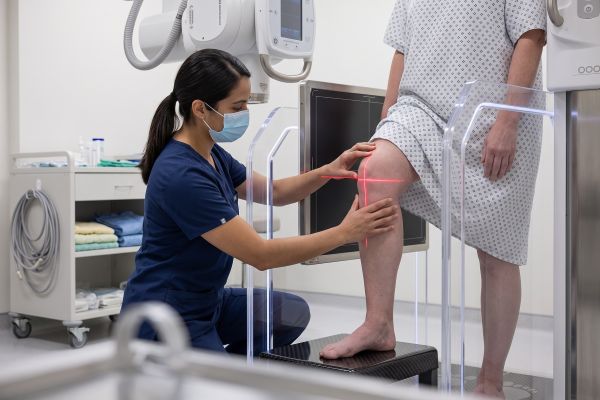
Rapid involuntary patient movement introduces visual distortion into continuous cine acquisitions.
A severe motion artifact blurs fine anatomical margins when patients cough or twitch during exposure. High acquisition frame rates reduce temporal blur, but fast joint movements can still exceed capture speeds. Technologists must instruct patients carefully before starting a dynamic digital radiography run.
Diagnostic Scope Boundaries Compared to Alternative Modalities
Dynamic DR bridges the clinical gap between static X-rays and continuous [fluoroscopy], but defined diagnostic boundaries exist:
- Lack of 3D Slice Depth: A dynamic digital radiography scan produces flat 2D projection images without 3D cross-sectional depth.
- Soft Tissue Contrast Limits: MRI remains superior for detailed evaluation of spinal cords, ligaments, and cartilage.
- Field of View Constraints: Physical detector dimensions limit total anatomical coverage during a single dynamic acquisition.
Recognizing these diagnostic limits prevents unnecessary exam ordering and ensures patients receive targeted medical imaging.
Conclusion
Recognizing the limitations of dynamic digital radiography helps healthcare facilities deploy the technology effectively alongside CT and MRI. Combining dynamic motion studies with cross-sectional modalities ensures complete diagnostic accuracy across diverse clinical cases.
You can contact the SEEHO clinical applications specialist group today to receive diagnostic guidelines and low-dose protocol recommendations for your imaging suite.