What Maintenance Does Dynamic Digital Radiography Require?
A dynamic digital radiography system requires daily tube warm-ups, weekly detector gain calibrations, quarterly mechanical inspections, and annual physics audits. Continuous motion imaging places higher thermal and electronic demands on X-ray components than standard static units. Establishing a structured preventive maintenance routine protects component integrity and ensures sharp image quality. Proper servicing keeps your dynamic digital radiography platform fully compliant with healthcare regulations.
Daily and Weekly Operator Maintenance Protocols
Radiologic technologists perform routine operational checks to preserve diagnostic clarity.
- Tube Warm-Up Sequences: Technologists run daily warm-up cycles to prepare cold anodes for rapid exposures.
- Detector Surface Cleaning: Staff wipe down flat-panel covers using approved non-corrosive disinfectants.
- [Gain Calibration] Routines: Technologists execute weekly calibrations to equalize pixel sensitivity across the detector.
- Visual Track Inspections: Operators inspect overhead rails and cables for visible mechanical obstacles.
Executing regular gain calibrations eliminates background electronic artifacts from your dynamic digital radiography cine loops. Staff must complete offset calibrations whenever room temperatures shift significantly.
Quarterly Service Engineer Hardware Audits
Certified field engineers perform deep technical checks during scheduled quarterly maintenance visits.
Engineers open generator cabinets to measure line voltage stability under peak power loads. Technicians lubricate mechanical gantry bearings and adjust counterweight tension cables to maintain smooth movement. Servicing teams test emergency stop switches to verify immediate system shutdown during dynamic digital radiography operations. Field engineers also inspect high-voltage cable insulation to prevent electrical arc damage.
Annual Regulatory and Radiation Safety Checks
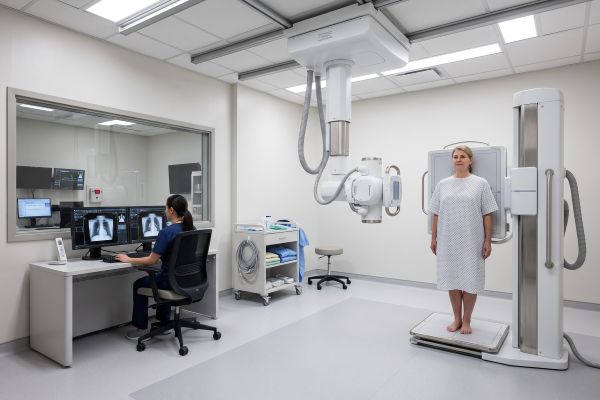
Annual servicing checks focus on patient radiation safety and institutional quality assurance standards.
Medical physicists measure entrance skin dose rates during continuous motion acquisitions. Physicists verify that automated exposure controls stop beams precisely at pre-set thresholds. Service technicians update workstation software and archive old log files to preserve dynamic digital radiography processing speeds. Certified audits guarantee that dynamic DR exposure outputs meet national healthcare guidelines.
Servicing Protocol Overview
Structuring your servicing schedule keeps dynamic DR equipment running reliably across its entire lifespan:
- Daily Operational Checks: Technologists run anode warm-up cycles, disinfect patient tables, and test positioning laser lights.
- Weekly Detector Calibrations: Technologists perform flat-panel gain and offset calibrations while clearing local software logs.
- Quarterly Technical Audits: Service engineers inspect high-voltage generator stability, test emergency switches, and adjust gantry cables.
- Annual Regulatory Compliance: Medical physicists conduct radiation exposure audits and recalibrate automated exposure controls.
Conclusion
Maintaining a dynamic digital radiography suite requires combining daily technologist checks with certified engineer inspections. Following structured service schedules prevents sudden equipment breakdowns and ensures consistent image sharpness.
You can contact the SEEHO service engineering group today to set up a customized preventive maintenance plan for your imaging suite.