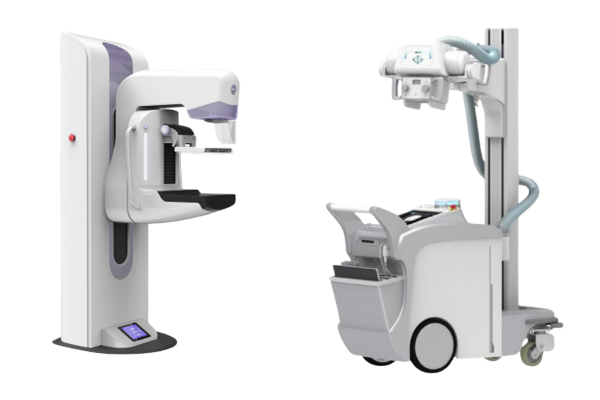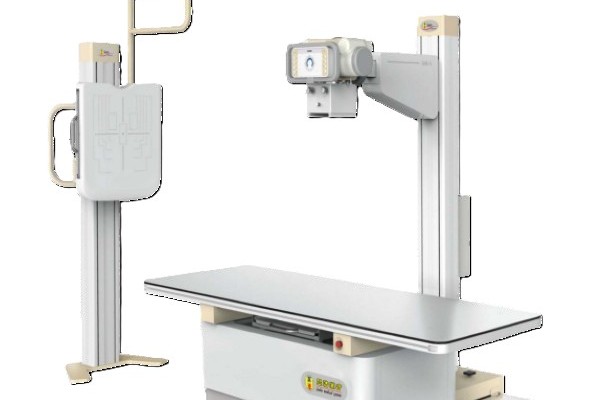
Benefits of Dynamic Digital Radiography Technology in Healthcare
Dynamic Digital Radiography (DDR) is an advanced X-ray imaging technology that captures continuous digital images instead of a single static image. By collecting multiple images within a short period, DDR allows healthcare professionals to observe anatomical structures and physiological movements in real time.
Compared with conventional Digital Radiography, DDR provides additional functional information beyond traditional static imaging. It helps clinicians evaluate motion-related conditions, improve diagnostic confidence, and support more comprehensive patient assessment.
As healthcare systems continue to focus on efficient and accurate diagnosis, Dynamic Digital Radiography technology is becoming an important development direction in modern Medical Imaging.
Real-Time Visualization of Anatomical Movement
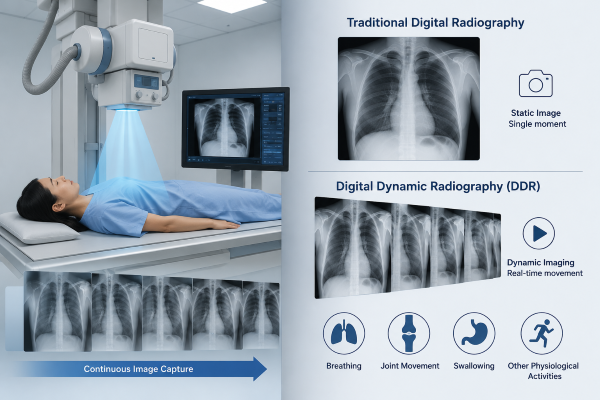
One of the most important benefits of Dynamic Digital Radiography is its ability to display real-time anatomical movement. Traditional Digital Radiography mainly provides static images, which show the structure of tissues and organs at a specific moment.
DDR technology captures a sequence of X-ray images continuously. This allows doctors to observe dynamic changes during breathing, joint movement, swallowing, or other physiological activities.
For example, a 46-year-old male patient with unexplained dyspnea and reduced exercise tolerance underwent Dynamic Digital Radiography evaluation after a conventional chest X-ray revealed an elevated right hemidiaphragm. The DDR examination demonstrated significantly reduced motion of the right diaphragm during breathing, helping clinicians confirm diaphragmatic dysfunction and providing functional information that was not available from standard X-ray imaging.
This additional motion information helps clinicians better understand functional abnormalities and improves the evaluation of conditions that may be difficult to assess using traditional X-ray images alone.
Improved Diagnostic Information Through Dynamic Imaging
Dynamic Digital Radiography provides both structural and functional information through continuous image acquisition. This makes it different from conventional Digital X-ray imaging, which mainly focuses on anatomical details.
The dynamic image sequences generated by DDR can help identify subtle movement changes and improve clinical evaluation. It provides doctors with more comprehensive information when assessing diseases related to respiratory function, musculoskeletal movement, and other dynamic processes.
By combining high-speed image capture with advanced image processing, DDR expands the capabilities of traditional DR Systems and supports more precise medical decisions.
Lower Radiation Dose Compared With Fluoroscopy
Fluoroscopy is widely used for real-time X-ray imaging, but it often requires longer exposure times during examinations. Dynamic Digital Radiography offers another option for observing motion while maintaining relatively low radiation exposure.
DDR uses a Flat Panel Detector to rapidly capture a series of X-ray images. Advanced processing technology then creates dynamic image sequences for clinical review.
Although DDR and fluoroscopy have different clinical applications, DDR can provide valuable dynamic imaging information for certain examinations with a simpler workflow and potentially lower radiation burden.
Enhanced Patient Examination Efficiency
Dynamic Digital Radiography improves examination efficiency by combining the advantages of digital imaging and motion analysis. Healthcare providers can obtain dynamic information during a short imaging procedure without requiring complex additional equipment.
The workflow of DDR is similar to conventional Digital Radiography. Patients can complete examinations using familiar X-ray positioning methods, while medical professionals receive additional functional imaging data.
This efficient workflow helps hospitals and diagnostic centers improve equipment utilization and reduce examination time.
Expanded Clinical Applications in Healthcare
The application areas of Dynamic Digital Radiography continue to expand with technological development. DDR can support various clinical fields that require movement analysis.
In respiratory imaging, DDR helps evaluate lung motion and breathing patterns. In orthopedics, it provides information about joint movement and mechanical function.
Other potential applications include swallowing assessment, cardiovascular motion evaluation, and rehabilitation monitoring. These applications demonstrate the growing role of Dynamic DR in modern Medical Imaging.
Better Integration With Digital Healthcare Systems
Modern DDR systems are designed to integrate with existing digital healthcare environments. Similar to other Digital Radiography Systems, DDR can connect with hospital information platforms, image management systems, and diagnostic workflows.
Through integration with PACS and other medical information systems, dynamic images can be stored, reviewed, and shared efficiently. This supports collaboration between radiologists and clinical departments.
The combination of DDR technology and digital healthcare infrastructure improves accessibility to imaging data and supports more efficient patient management.
Future Development of Dynamic Digital Radiography Technology
With continuous advances in detector technology, artificial intelligence, and image processing, Dynamic Digital Radiography is expected to play a larger role in healthcare.
Future DDR systems may provide faster image analysis, improved motion detection, and enhanced diagnostic assistance through AI-based technologies. These developments will further improve the value of dynamic X-ray imaging.
As hospitals seek more efficient and informative imaging solutions, DDR technology represents an important evolution from traditional static Digital Radiography toward functional and dynamic Medical Imaging.
Conclusion
Dynamic Digital Radiography (DDR) technology provides significant advantages in modern healthcare by offering real-time visualization, improved diagnostic information, efficient workflow, and expanded clinical applications.
Compared with traditional Digital Radiography, DDR captures continuous image data that helps clinicians better understand both anatomical structures and functional movements. With ongoing technological improvements, DDR will continue to support the development of advanced medical imaging solutions.
If you are planning to purchase a new Digital X-ray Machine or upgrade an existing imaging device, welcome to contact us. Our professional team will provide suitable product solutions and technical support.