Dynamic Digital Radiography and Image Analysis Technologies
Dynamic Digital Radiography (DDR) is an advanced medical imaging technology that captures continuous X-ray image sequences instead of producing only a single static image. By adding the time dimension to digital imaging, DDR provides additional information about motion and physiological changes beyond conventional Digital Radiography.
Unlike traditional X-ray imaging methods that mainly focus on static anatomical structures, this dynamic imaging technology enables healthcare professionals to observe movement-related changes and obtain additional information about functional processes.
However, capturing dynamic images is only the beginning. The large amount of data generated by DDR requires advanced image analysis technologies to improve visualization, extract meaningful information, and support clinical interpretation. By combining dynamic image acquisition with intelligent analysis methods, healthcare professionals can better evaluate motion patterns, functional changes, and processes that may not be visible in traditional X-ray examinations.
Dynamic Digital Radiography Generates Continuous Image Data
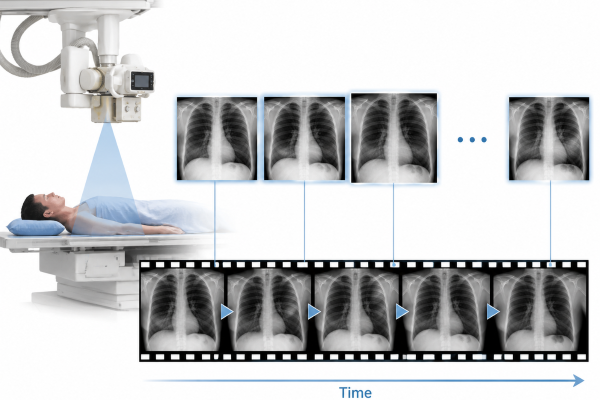
The key advantage of DDR is its ability to record continuous image sequences over time. Unlike conventional Digital Radiography, which mainly provides information from a single exposure, this technology captures multiple images in rapid succession to display dynamic processes.
These dynamic image sequences allow clinicians to observe movement-related changes, including respiratory motion, joint movement, and other physiological activities. By introducing temporal information into X-ray imaging, DDR extends medical imaging from static anatomical evaluation toward functional assessment.
The continuous data generated during dynamic imaging provides valuable information about how anatomical structures change during movement. Instead of analyzing only the appearance of a structure, clinicians can evaluate its motion patterns and functional behavior.
Compared with traditional static imaging, dynamic X-ray imaging offers a broader perspective by combining anatomical visualization with motion analysis. This capability creates new opportunities for functional evaluation and supports the development of more advanced medical imaging workflows.
Image Analysis Technologies Improve Dynamic Image Interpretation
Dynamic Digital Radiography (DDR) generates a large amount of image data during a short examination period. Advanced image analysis technologies help process these dynamic sequences and convert complex imaging data into meaningful clinical information.
Common image analysis technologies include:
- Image enhancement to improve the visibility of anatomical structures
- Motion tracking to analyze movement patterns over time
- Image processing to reduce noise and improve image consistency
- Quantitative analysis to measure functional changes from dynamic sequences
These technologies allow clinicians to evaluate motion information more effectively. Motion analysis algorithms can identify changes between consecutive images and provide additional insights that may be difficult to obtain from static radiographs.
By improving image quality and extracting functional information, image analysis technologies enhance the clinical value of this dynamic imaging technology and support more efficient image interpretation.
AI-Assisted Analysis Expands Dynamic Imaging Capabilities
Artificial intelligence (AI) is becoming an important tool in medical image analysis. In DDR, AI-assisted methods can support automated image processing, feature extraction, and quantitative evaluation of dynamic image data.
AI algorithms can analyze large volumes of dynamic image sequences and help identify patterns within continuous imaging data. This capability may reduce manual processing time and improve workflow efficiency during image review.
Although AI is designed to assist rather than replace healthcare professionals, it provides additional support for interpreting complex imaging information. With continued development, AI may further improve the analysis capabilities of functional imaging assessment.
Clinical Applications of Dynamic Digital Radiography
Dynamic Digital Radiography is increasingly applied in clinical situations where motion evaluation and functional assessment are important. By capturing continuous image sequences, this technology allows clinicians to observe physiological changes that may not be visible in conventional static X-ray examinations.
One important application is chest imaging and respiratory assessment. During breathing, DDR can capture changes in lung movement and diaphragm activity, providing additional information about respiratory function.
For example, in a 2022 pilot study, FitzMaurice et al. from Liverpool Heart and Chest Hospital and the University of Liverpool evaluated Dynamic Chest Radiography in 21 patients to assess diaphragm movement. The researchers analyzed dynamic image sequences and used motion measurements to evaluate respiratory patterns. The study showed that dynamic image analysis could provide quantitative information about respiratory motion and support functional respiratory assessment.
Beyond respiratory imaging, DDR has also been investigated in musculoskeletal applications. By recording joint movement, this technology can help evaluate motion patterns and functional changes in areas such as the knee, shoulder, and other moving structures.
Future Development of Dynamic Digital Radiography and Image Analysis
The future development of Dynamic Digital Radiography will be closely connected with advances in image analysis technologies, artificial intelligence, and medical data processing.
Improved analysis algorithms are expected to enhance motion tracking, quantitative evaluation, and automated interpretation of dynamic image sequences. These developments may help healthcare professionals obtain more detailed functional information while improving diagnostic efficiency.
The combination of AI and advanced dynamic imaging technology will continue to expand the potential applications of this imaging approach. By integrating continuous image acquisition with intelligent analysis methods, future solutions may provide stronger support for clinical decision-making and medical workflow optimization.
Conclusion
Dynamic Digital Radiography represents an important advancement in medical imaging by combining continuous X-ray image acquisition with functional assessment capabilities. Compared with conventional Digital Radiography, it provides additional information about motion and physiological changes, helping clinicians better understand dynamic processes during examinations.
With the support of image analysis technologies and AI-assisted solutions, this dynamic X-ray imaging approach can transform continuous image data into valuable clinical information. These developments continue to improve the efficiency and capabilities of modern medical imaging workflows.
At SEEHO Medical Equipment, we understand the importance of reliable imaging performance and advanced technology in modern clinical environments. With expertise in medical imaging solutions, we provide Digital Radiography systems designed to deliver excellent image quality, stable operation, and efficient workflow support. Contact us today to discuss your imaging requirements and learn how our technology and experience can support your clinical imaging needs.