What Are the Maintenance Requirements for a Digital X-ray Machine?
A Digital X-ray Machine is a critical imaging system in modern healthcare facilities. It supports fast, accurate diagnosis and efficient clinical workflows. However, to ensure stable performance, consistent image quality, and long service life, regular maintenance is essential.
Proper maintenance not only reduces unexpected downtime but also helps healthcare providers maintain diagnostic accuracy, improve workflow efficiency, and extend equipment lifespan.
Understanding Routine Maintenance for a Digital X-ray Machine
Routine maintenance is the foundation of reliable DR Systems performance. A Digital X-ray Machine operates through a combination of hardware, software, and imaging components, all of which require regular checks.
Healthcare facilities should establish a scheduled maintenance plan that includes daily, weekly, and monthly inspections.
Key routine maintenance tasks include:
- Checking system startup and shutdown performance
- Inspecting cables, connectors, and physical components
- Ensuring stable power supply
- Verifying software functionality and system logs
- Cleaning external surfaces and patient contact areas
Consistent routine maintenance helps prevent minor issues from developing into major system failures.
Ensuring Flat Panel Detector Stability
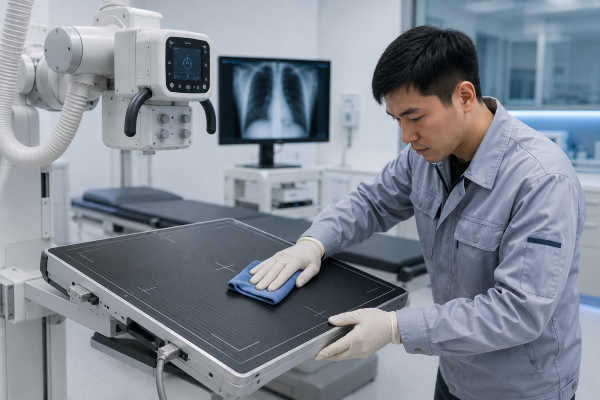
The Flat Panel Detector (FPD) is one of the most important components of a Digital X-ray Machine, directly affecting image quality and diagnostic accuracy.
Proper maintenance of the detector ensures stable imaging performance and reduces the risk of image artifacts or signal degradation.
Maintenance considerations include:
- Avoiding physical impact or pressure on the detector
- Keeping the detector clean and dust-free
- Regular calibration checks
- Monitoring image uniformity and noise levels
- Following manufacturer handling guidelines
A well-maintained detector ensures consistent high-quality imaging and reliable clinical results.
Software Updates and System Optimization
Modern Digital X-ray Machines rely heavily on software for image processing, system control, and workflow management. Regular updates are essential to maintain optimal performance.
Software maintenance includes:
- Installing system updates and patches
- Optimizing image processing algorithms
- Ensuring compatibility with hospital systems
- Backing up system configurations
- Monitoring system performance logs
Keeping the software up to date improves system stability, enhances imaging performance, and ensures compatibility with PACS and RIS systems.
Preventive Maintenance for Digital X-ray Machine Hardware Components
Modern Digital X-ray Machines rely heavily on software for image processing, system control, and workflow management.
Key hardware components that require attention include:
- X-ray tube assembly
- Generator system
- Mechanical structure (U-arm, ceiling suspension, or stand)
- Power supply units
- Cooling systems
Preventive maintenance activities may include inspection, calibration, lubrication (for mechanical parts), and replacement of worn components.
This approach significantly reduces the risk of unexpected breakdowns and extends equipment lifespan.
Calibration and Image Quality Control
Maintaining consistent image quality is essential for diagnostic reliability in DR Systems. Calibration ensures that the system produces accurate and repeatable imaging results.
Quality control procedures typically include:
- Exposure parameter verification
- Image uniformity testing
- Detector calibration
- Dose monitoring
- Contrast and resolution checks
Regular quality control helps ensure that the Digital X-ray Machine continues to meet clinical imaging standards.
Cleaning and Environmental Requirements
Environmental conditions have a direct impact on the performance and longevity of a Digital X-ray Machine. Proper cleaning and controlled installation environments are essential.
Maintenance guidelines include:
- Keeping the imaging room clean and dust-free
- Maintaining stable temperature and humidity levels
- Avoiding excessive vibration or electromagnetic interference
- Cleaning external surfaces with appropriate non-corrosive materials
- Ensuring proper ventilation for system components
A stable environment helps reduce wear and improves long-term reliability.
Professional Service and Preventive Inspection
In addition to internal maintenance, regular professional servicing of DR Systems is essential for long-term system stability.
Professional maintenance typically includes:
- Comprehensive system inspection
- Electrical safety checks
- Detector performance evaluation
- Mechanical alignment verification
- Software diagnostics
Most healthcare facilities schedule professional servicing on a semi-annual or annual basis depending on usage intensity.
Training and Operator Responsibility
Proper operation of DR Systems also plays an important role in system maintenance and long-term performance.
Operators should be trained to:
- Follow correct imaging procedures
- Handle the detector carefully
- Avoid improper mechanical force on system components
- Report system abnormalities early
- Follow standard operating protocols
Good operator habits significantly reduce system wear and prevent avoidable damage.
Conclusion
The maintenance of a Digital X-ray Machine includes routine inspection, preventive maintenance, software updates, detector care, environmental control, and professional technical support. Each of these factors plays an important role in ensuring stable system performance and consistent image quality.
With proper maintenance management, healthcare facilities can not only improve diagnostic efficiency but also extend equipment lifespan and reduce long-term operational costs.
If you are looking for a more stable and reliable Digital X-ray solution, or would like to understand how proper maintenance strategies can improve system performance in your clinical environment, feel free to contact us. We can provide tailored equipment recommendations and technical support based on your application needs to help optimize the overall performance of your imaging system