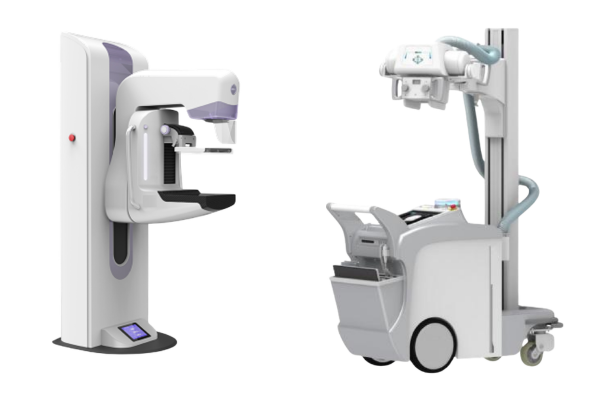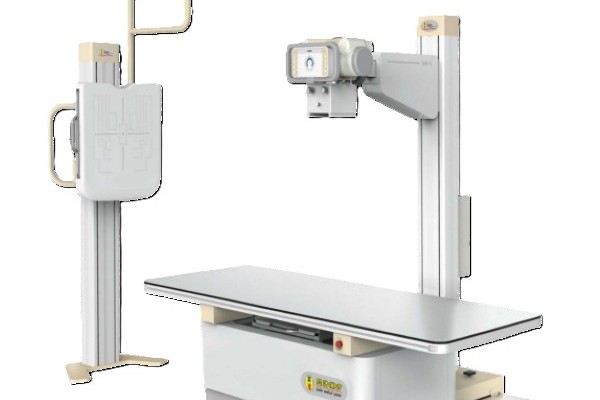
When buying dynamic digital radiography equipment, buyers should compare flat-panel detector resolution, detective quantum efficiency, full-field frame rates, generator power ratings, X-ray tube heat capacity, and DICOM software integration. Evaluating a single specification in isolation can lead to misjudging true system performance, as clinical output depends on how effectively hardware and software components work together. Reviewing technical specifications across imaging, exposure control, software, and physical dimensions ensures that healthcare facilities choose hardware built for long-term diagnostic accuracy.
Which Dynamic Digital Radiography Specifications Affect Image Quality?
Flat-panel detector specifications govern baseline structural sharpness, low-dose performance, and signal clarity during dynamic digital radiography examinations.
- Pixel Pitch (µm): Smaller pixel pitch values increase spatial resolution, helping clinicians view fine bone borders and subtle joint spaces clearly.
- Detective Quantum Efficiency (DQE): High detective quantum efficiency indicates superior photon conversion, preserving contrast while keeping radiation doses low.
- Scintillator Composition: Cesium Iodide (CsI) scintillators provide lower background noise and higher light yield than traditional material options.
- Spatial Resolution (lp/mm): Measured in line pairs per millimeter, this parameter defines physical edge sharpness across structural anatomy.
Comparing these detector parameters together helps procurement teams verify that high spatial sharpness does not come at the expense of dose efficiency.
How Should You Compare Dynamic Acquisition Specifications?
Dynamic acquisition capabilities dictate how smoothly a system captures continuous physiological motion.
Full-field frame rates (fps) must be verified across the entire detector surface rather than rely on cropped or binned sub-regions. Continuous cine run limits must also be checked to ensure the equipment supports complete breathing cycles and dynamic swallowing studies. Furthermore, tight pulse width controls freeze rapid mechanical movement, eliminating motion blur on moving structural margins.
Hardware Specification Benchmark Table
Use this comparative breakdown when evaluating vendor spec sheets for dynamic digital radiography hardware:
| Spec Category | Target Technical Benchmark | Practical Clinical Impact |
| Detector Hardware | CsI Scintillator / DQE > 70% | Preserves visual detail while maintaining low radiation dose |
| Acquisition Speed | Native 15 – 30 fps full-field | Ensures smooth motion capture without spatial resolution loss |
| Generator Power | 50 kW minimum / >300 kHU Tube | Prevents voltage drops and thermal shutdowns during cine runs |
| IT Connectivity | DICOM Worklist / Structured Dose | Automates hospital network communication and dose tracking |
Which X-Ray and Radiation-Related Specifications Should You Review?
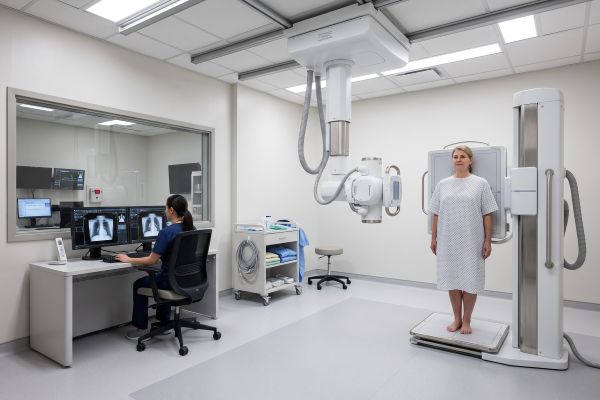
Generator power and exposure control specifications determine beam stability and heat management during extended cine runs.
High-output generators (50 kW to 80 kW) deliver steady voltage during rapid pulsed acquisitions in dynamic digital radiography procedures. Anode heat storage capacity and rapid thermal dissipation rates prevent the X-ray tube from overheating during continuous back-to-back patient exams. Equipment buyers should also review automated exposure controls and dose area product tracking tools to ensure strict compliance with institutional radiation safety standards.
Which Software and Connectivity Specifications Are Important?
Workstation software features and network interfaces govern how efficiently dynamic datasets move through hospital archives.
Workstations running dynamic digital radiography software must offer intuitive cine playback controls, including variable-speed scrubbing, continuous looping, and frame-by-frame stepping. Real-time recursive noise filters clean up electronic background grain without introducing motion artifacts. On the IT side, full DICOM compliance—including Modality Worklist and Structured Dose Reporting—guarantees seamless data transfer to PACS archives.
How Do Physical and Operational Specifications Affect Daily Use?
Physical dimensions and mechanical limits influence installation ease and daily technologist ergonomics.
Procurement committees should examine gantry movement ranges, table weight limits, vertical elevation bounds, and overall equipment footprints. Compact designs simplify room retrofitting, while flexible positioning controls speed up patient positioning during busy clinical shifts.
Conclusion
Comparing technical specifications for dynamic digital radiography requires analyzing detector resolution, temporal frame rates, generator output, software tools, and physical dimensions as a unified system. Balancing these parameters against expected exam volume ensures a secure, high-value investment.
Need exact technical parameter comparisons for your procurement tender? Request complete specification sheets from the SEEHO product engineering team today to receive a side-by-side technical evaluation for your dynamic digital radiography project.